


हाल ही में, Weiwa Machinery had the pleasure of conducting an on-site trial and sample demonstration of our honeycomb briquette charcoal machine for a valued client from Uganda.
Why Uganda Needs Honeycomb Briquette Charcoal Machines?
युगांडा, like many East African nations, faces a growing demand for clean, affordable, and locally producible cooking and heating fuel. Traditional firewood and irregular charcoal lumps dominate the market, but they burn unevenly, generate excess smoke, and contribute to deforestation. The honeycomb briquette charcoal machine in Uganda offers a practical alternative by converting locally available charcoal dust, कोयला जुर्माना, and certain biomass residues into uniform, high-density honeycomb briquettes with superior combustion characteristics.
The honeycomb design—characterized by multiple evenly spaced holes passing through the briquette—allows air to circulate during ignition and burning. This results in faster lighting, steadier flames, reduced smoke emission, and significantly longer burn times compared to loose powder or irregularly shaped alternatives. For Ugandan small-to-medium fuel producers, investing in a coal briquettes making machine means adding value to waste material and meeting the needs of both domestic households and commercial food vendors who prefer consistent, clean-burning fuel.
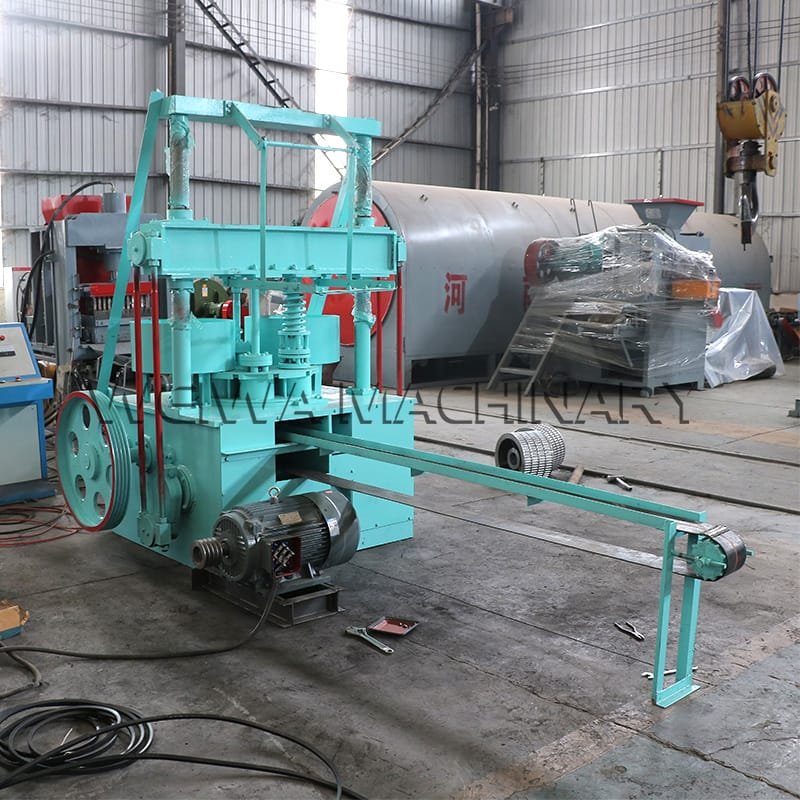
What Is a Honeycomb Briquette Charcoal Machine?
A honeycomb briquette charcoal machine, sometimes referred to as a honeycomb punching machine या honeycomb charcoal coal briquette forming machine, is a mechanical press that compresses powdered raw materials—typically charcoal powder, coal dust, or a blend of both—into predetermined shapes using a rotating table mold and a punch head. Unlike simple extrusion screw machines, the punch-type coal briquettes making machine applies high-pressure stamping, which yields denser, more structurally stable briquettes that resist crumbling during packaging, transport, and stacking.
Core Working Principle of the Honeycomb Punching Machine
The operational sequence of our honeycomb punching machine begins with a measured feed of prepared powder into the mold cavity located on a rotary indexing table. Once the cavity is filled, the table rotates to position the filled mold beneath the punch head. The punch descends with calibrated pressure, compacting the loose powder into a solid briquette that takes the exact contour of the mold—commonly a round or square shape with punched holes in the center pattern. The finished briquette is then ejected onto a discharge conveyor or collection tray. This cycle repeats at adjustable strokes per minute depending on the model specification chosen by the customer.
Typical Raw Material Requirements for the Coal Briquettes Making Machine
To achieve optimal briquette integrity and combustion behavior, the coal briquettes making machine requires raw materials prepared within certain parameters. The particle size of charcoal powder or coal dust should generally be under three to five millimeters, with the majority falling below two millimeters for best compaction. Moisture content is another critical factor and is ideally maintained between eight and fifteen percent. Excessively wet material leads to weak bonding and potential cracking upon drying, while overdried material may require a small amount of natural binder or a light misting step to promote cohesion inside the honeycomb charcoal coal briquette forming machine. Many Ugandan clients mix a small proportion of cassava starch or molasses-based binder with the powder, especially when working primarily with pure charcoal dust.
Pre-Trial Consultation with Our Uganda Client
Before dispatching the honeycomb briquette charcoal machine in Uganda trial unit, our technical team held detailed discussions with the client to understand their local raw material availability, target daily output, preferred briquette diameter and thickness, and intended end-market—in this case a combination of household cooking and small restaurant supply in Kampala and surrounding districts. Based on this information, we recommended a medium-capacity honeycomb punching machine equipped with interchangeable molds capable of producing one-hundred-forty-millimeter round honeycomb briquettes with nineteen vent holes, as well as optional square molds for future product line expansion.
The client sourced charcoal dust from a nearby wholesale charcoal market where broken pieces and sweepings are typically discarded or sold at very low cost. Coal fines were procured from a regional supplier dealing in washed smalls. Both materials were air-dried further on a clean concrete surface for approximately forty-eight hours to bring moisture into the acceptable range prior to the trial.
Step-by-Step Trial Process of the Honeycomb Briquette Charcoal Machine
Raw Material Sieving and Blending
The first phase of the on-site trial involved passing the collected charcoal dust and coal fines through a vibrating sieve to remove oversized particles and impurities such as stones or metal fragments. The sieved powder was then blended manually in a clean mixing trough. For the initial test batch, the client chose a seventy percent charcoal dust to thirty percent coal dust ratio, with a two-percent addition of dissolved cassava starch as an organic binder. Uniform blending ensures that each briquette coming out of the coal briquettes making machine has consistent color, strength, and burn rate.
Machine Installation and Safety Check
Upon arrival at the client’s workshop, our engineer supervised the placement of the honeycomb briquette charcoal machine on a level concrete foundation, verified that the supplied voltage matched the motor rating—typically three-phase three-eighty-volt fifty-hertz for export models—and confirmed proper grounding. Lubrication points were checked, the mold was installed and aligned, and safety guards were positioned. Only after these checks was the main power activated for a no-load run to observe rotational smoothness and listen for abnormal noise from the gearbox or punch assembly.
Calibration and Sample Production Run
With the machine warmed up, the hopper was fed with the prepared mixture. The punch stroke frequency was initially set to a conservative level to allow observation of filling behavior and ejection quality. After the first dozen cycles, minor adjustments were made to the feeding gate opening and the punch descent depth to optimize density without overloading the motor. Within minutes, the honeycomb punching machine began delivering uniformly shaped briquettes exhibiting clean hole definition, sharp edge retention, and a matte-dark finish indicative of proper compaction.
A continuous ten-minute production run was recorded to assess output stability. The honeycomb charcoal coal briquette forming machine maintained steady cycling with no jamming, and the ejected briquettes showed no signs of delamination or corner chipping. The client’s team was then invited to operate the control buttons themselves under guidance, reinforcing confidence in day-to-day usability of the coal briquettes making machine.
Sample Showcase – Finished Honeycomb Briquette Quality Review
Following the trial run, a representative sample set was set aside for physical inspection and a simple field burn test conducted in an open masonry stove typical of Ugandan street food stalls. The key observations are summarized below.
Briquette Geometry and Visual Inspection
The trial samples measured one hundred forty millimeters in diameter and approximately sixty-five millimeters in thickness, with nineteen evenly spaced holes of fourteen-millimeter diameter. Edges were crisp, holes fully penetrated, and the surface exhibited a homogeneous dark grey tone reflecting the charcoal–coal blend ratio. There was no visible powder shedding when samples were gently rubbed by hand—a good indicator that the compression setting on the honeycomb briquette charcoal machine was correctly tuned.
Density and Drop Resistance
A random sample was dropped three times from waist height onto a concrete floor. The briquette sustained only minor edge abrasion with no structural fracture. This level of mechanical resilience is important for Ugandan distributors who need to bag and transport briquettes over uneven roads. The high density achieved by the honeycomb punching machine also correlates with longer burn duration per kilogram of fuel.
Combustion Performance in Field Burn Test
Using a small quantity of dry kindling to ignite a stack of three honeycomb briquettes, full ignition was observed within four to six minutes. Once lit, the briquettes produced a steady orange glow with minimal initial smoke that quickly dissipated. The holes facilitated airflow and even progression of the combustion front from outer perimeter toward the center. Total visible burn time for the test sample exceeded ninety minutes, and residual ash was fine and relatively low in volume. The client noted that this performance compared favorably with imported pre-formed briquettes previously purchased for benchmarking purposes.
Customization Options of the Honeycomb Charcoal Coal Briquette Forming Machine
One advantage frequently cited by buyers of Weiwa Machinery equipment is the flexibility to customize mold shapes and sizes. The same coal briquettes making machine base frame can accommodate molds for round honeycomb, square honeycomb, hexagonal shapes, and even decorative flower-pattern variants upon request. Common diameters range from one hundred twenty millimeters up to two hundred twenty millimeters, with variable hole counts and hole diameters to suit local stove designs encountered across Uganda and other African markets.
In addition to mold customization, we offer optional features such as automatic belt conveyors, dual-voltage motors for areas with unstable power, and diesel-engine drive versions of the honeycomb briquette charcoal machine in Uganda for rural locations off the national grid. Color coating, brand engraving on the machine body, and spare part kits are also available to support independent maintenance by the customer’s technicians.
Common Questions from Ugandan Buyers About the Coal Briquettes Making Machine
Is the Honeycomb Briquette Charcoal Machine Difficult to Operate?
The honeycomb punching machine is designed with a straightforward control panel consisting of a main power switch, start/stop pushbuttons, and an emergency stop. Daily operation involves filling the hopper, starting the machine, and periodically checking raw material level. Mold changes can be performed with basic hand tools and typically take under thirty minutes once the operator is familiar with the procedure. Weiwa Machinery provides an English-language operation manual and can arrange video guidance if needed.
What Is the Typical Production Capacity?
Depending on mold size and motor configuration, our honeycomb charcoal coal briquette forming machine models deliver anywhere from two hundred kilograms per hour for smaller charcoal-only recipes up to one ton per hour or more when processing coal fines. The Uganda trial unit ran at approximately five hundred to six hundred kilograms per hour during the test, which aligns well with the client’s planned two-shift daily operation targeting small-scale commercial supply.
Does the Machine Require Special Binder?
No proprietary binder is required. Many customers successfully use starch-based binders derived from cassava, corn, or wheat, or simply rely on the natural binding property of properly conditioned coal dust when moisture and particle size distribution are well controlled. Our team can advise on binder formulation suited to the specific raw material blend you plan to use with your coal briquettes making machine.
After-Sales Support and Warranty by Weiwa Machinery
Every honeycomb briquette charcoal machine supplied by Weiwa Machinery is covered by a standard twelve-month warranty on core components including the main motor, reduction gearbox, and punch assembly. We maintain an inventory of wearing parts such as molds, feeder blades, and seals for quick dispatch worldwide. Remote troubleshooting is available via WhatsApp or email, and we can schedule video calls to walk your team through routine maintenance procedures specific to the honeycomb punching machine you purchased.
For Ugandan and other African clients, we also assist with container loading optimization, customs documentation guidance, and pre-shipment photos so you know exactly what to expect upon arrival. Our aim is to be more than a machinery vendor—we strive to be a long-term production partner for your coal briquettes making machine investment.
Why Choose Weiwa Machinery Honeycomb Briquette Solutions?
The successful trial of our honeycomb briquette charcoal machine in Uganda demonstrated that with locally sourced raw materials and proper preparation, the honeycomb charcoal coal briquette forming machine produces high-quality, market-ready fuel briquettes that meet both performance expectations and environmental considerations. Whether you are starting a new briquette production business or upgrading an existing line, our coal briquettes making machine range combined with responsive technical support gives you a solid foundation for growth in the Ugandan and wider East African market.
If you would like to see trial videos, request a formal quotation, or discuss mold customization for your honeycomb punching machine, please contact our sales team using the details below.
के बारे में वेइवा मशीनरी
वेइवा मशीनरी (वी वा मशीनरी) is a professional manufacturer of briquette machinery and carbonization equipment based in China, serving customers in over 130 countries including Uganda, केन्या, Tanzania, Nigeria, इंडोनेशिया, भारत, वियतनाम, पाकिस्तान, टर्की, and Brazil. Our product range covers honeycomb briquette charcoal machines, चूरा ईट मशीनें, charcoal carbonization furnaces, crushers, ड्रायर, and complete briquette production lines. With more than ten years of export experience, we provide factory-direct pricing, custom engineering, and ongoing after-sales service to help your fuel processing business succeed.
हमसे संपर्क करें:
Mobile / WhatsApp: +86 138 3809 3177
ईमेल: info@cjlmachinegroup.com
Website: https://cjljx.com


 WeChat

 +8615937143060
