


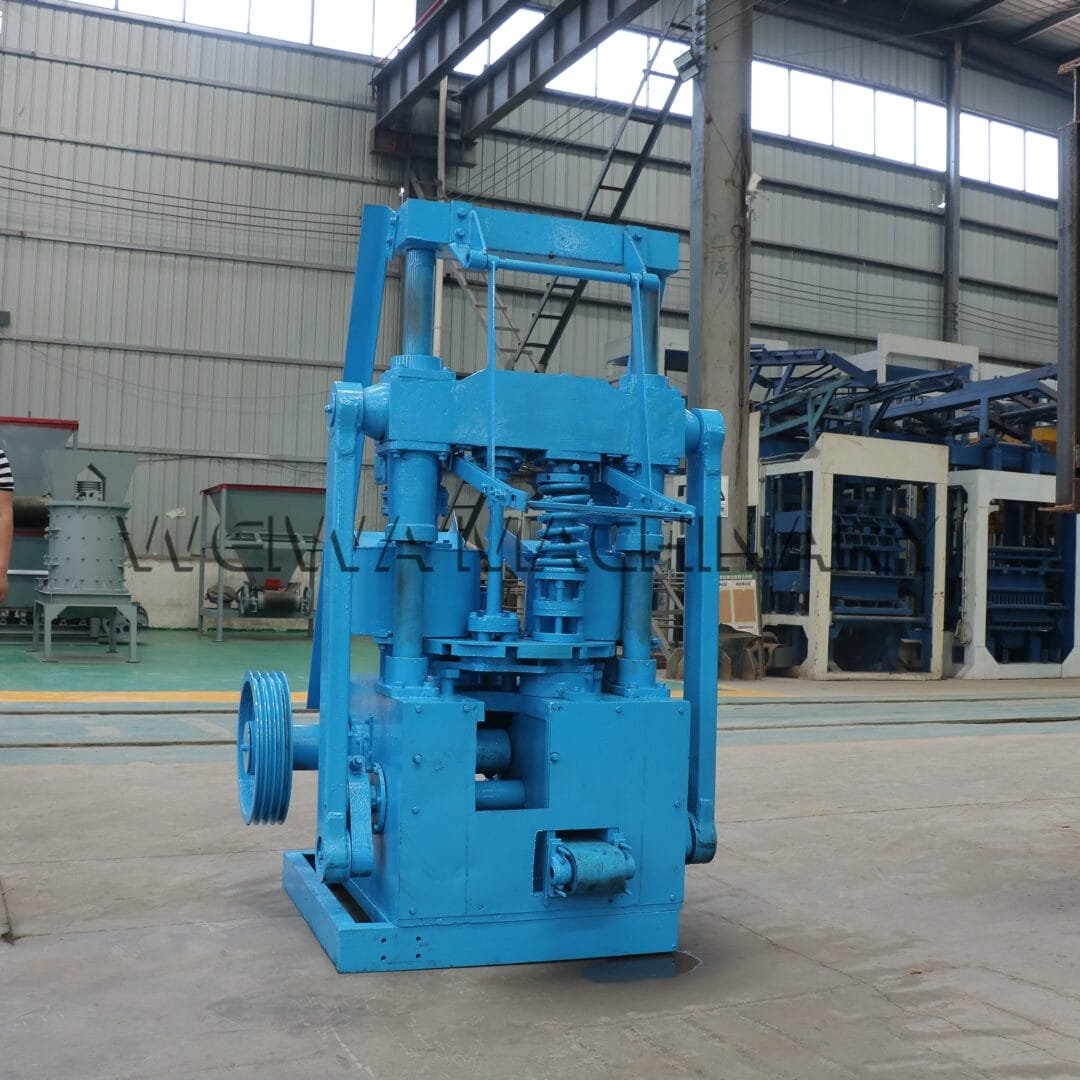
Factory Shipment Of Honeycomb Briquette Charcoal Machine
The shipment began inside our production workshop, where the honeycomb briquette charcoal machine underwent assembly, mold calibration, motor testing, and full trial operation. Our engineers checked pressure consistency, mold alignment, discharge smoothness, and electrical safety before the machine was allowed to leave the factory. Only after the trial run produced uniform honeycomb briquettes did our team begin export packing.
Container Loading And Sea Freight Preparation
Export packing was designed for long-distance sea freight. Steel wire fixing, moisture-proof film, wooden reinforcement, and shock-resistant supports were used to protect the machine during container transport. Spare punches, molds, belts, and tool kits were packed separately and labeled for easy installation after arrival. Our logistics team coordinated booking, customs documents, commercial invoice, पैकिंग सूची, and bill of lading so the Philippine client could receive the goods with fewer delays at the destination port.
The buyer in the Philippines requested a machine configuration suitable for local fuel demand. That meant adjustable mold size, stable hourly output, simple operation, and components resistant to humidity. Weiwa Machinery configured the equipment to handle charcoal powder, coal dust, coke powder, and selected biomass residues, giving the client flexibility in raw material sourcing.

Why The Philippines Needs Coal Briquettes Making Machine?
The Philippines has a large base of households, eateries, bakeries, grilling shops, and small factories that depend on affordable heat and cooking fuel. Traditional charcoal remains popular, but supply instability, deforestation concerns, and inconsistent quality push local businesses to look for better alternatives. A coal briquettes making machine allows Filipino entrepreneurs to convert low-cost powder materials into standardized fuel blocks with longer burning time, higher calorific value, and more controlled ash formation.
Raw Materials Available In The Philippines
One reason the market fits this technology is raw material availability. नारियल शेल लकड़ी का कोयला, चावल की भूसी का कोयला, चूरा, coal dust, and anthracite fines can all be processed with the right formula and binder system. Instead of importing finished fuel or relying on irregular charcoal supply, local producers can build a domestic briquette business around materials already present in their region.
Honeycomb briquettes also perform well in commercial kitchens and industrial heating because the multi-hole structure improves airflow. Better airflow means steadier combustion, less smoke under proper formulation, and easier heat management. For restaurant owners and small manufacturers, that translates into lower operating cost and more predictable daily production.
Honeycomb Charcoal Coal Briquette Forming Machine In Export Quality
The Honeycomb Charcoal Coal Briquette Forming Machine shipped to the Philippines was built for continuous work, not just demonstration. Its punching system compresses powdered material into round, वर्ग, हेक्सागोनल, or custom honeycomb shapes depending on the mold. The rotating table, feeding hopper, punch assembly, and discharge channel were calibrated to reduce material bridging and maintain uniform density across every piece.
Buyers in Southeast Asia often worry about after-sales service, spare parts, and local voltage. Weiwa Machinery addresses this by offering voltage customization, English operation manuals, mold drawings, commissioning guidance, and remote technical support. For the Philippine client, the priority was simple operation because labor teams may not have deep mechanical backgrounds. The machine was therefore tuned for stable cycling, easy mold change, and straightforward daily cleaning.
Humid Climate And Machine Durability
Humidity is a real issue in Manila, Cebu, Davao, and many island markets. Coastal storage yards, rainy seasons, and dusty production floors can shorten the life of poorly protected equipment. For this export order, surface treatment, rust-resistant coating, sealed electrical components, and corrosion-aware material choices were applied where feasible. The goal is not only to start the machine correctly but to keep it running for years under tropical conditions.
Honeycomb Punching Machine And Local Fuel Production
A Honeycomb Punching Machine is the core of the production line, but it rarely works alone in a profitable project. मुंहतोड़, mixing, binding, molding, सुखाने, cooling, and packing all influence final quality. The Philippine buyer can begin with the punching machine and later add a crusher, wheel mixer, binder dosing system, mesh belt dryer, and weighing packer as demand grows.
This modular approach is important for new investors. Instead of spending the entire budget on a giant plant, a Filipino entrepreneur can start with a compact honeycomb briquette unit, prove local sales, build distributor relationships, and then scale capacity. Weiwa Machinery often helps clients design the layout from the first phase to the second phase so future expansion does not require rebuilding the whole workshop.
Honeycomb briquettes also create branding opportunities. Local sellers can package fuel under their own label, differentiate by hole pattern, weight, burning time, and odor level, and supply hotels, canteens, barbecue chains, bakeries, and wholesale hardware stores. In markets where consumers care about steady fire and lower smoke, product consistency becomes the competitive advantage.
Southeast Asia Market Outlook For Honeycomb Briquette Machines
The Philippines is only one part of a much larger regional trend. इंडोनेशिया, वियतनाम, थाईलैंड, मलेशिया, म्यांमार, and Cambodia all face similar dynamics: rising fuel prices, abundant agricultural residues, urban air-quality concerns, and growing small-business demand for affordable solid fuel. Honeycomb briquette technology fits because it turns waste powder into a marketable energy product.
In Vietnam and Thailand, rice husk and wood residue are common. In Indonesia and Malaysia, coconut shell and palm-related biomass create strong feedstock potential. In the Philippines, coconut shell charcoal and coal dust blends are especially relevant for grilling and commercial cooking. The raw materials change by country, but the machine logic stays the same: crush, mix, mold, dry, package, and distribute.
Distributor Opportunity In Southeast Asia
Beyond single-machine buyers, Weiwa Machinery is seeing more regional distributors enter the briquette equipment market. A distributor in Manila or Cebu can serve nearby islands, offer demonstration units, stock spare molds, and provide faster local response than an overseas seller. This reduces delivery anxiety for end users and creates a more sustainable sales channel for machinery exporters.
Government pressure on open burning, rising interest in cleaner cooking fuel, and the need for rural employment all support long-term demand. Honeycomb briquette plants can be established near agricultural zones, create local jobs, use local waste, and supply urban fuel markets at the same time. That combination makes the segment attractive for investors who want both profit and social impact.
Why Buyers Choose Weiwa Machinery?
Weiwa Machinery is not only selling a honeycomb briquette charcoal machine. We are supplying a production solution backed by factory experience, export documentation, mold customization, and ongoing technical support. Buyers choose us because the quotation is transparent, the machine is configurable, and the team understands that a machine is only useful when it produces sellable briquettes in the buyer’s local environment.
Our engineering team reviews the client’s raw material type, moisture level, target briquette shape, daily capacity, local voltage, labor skill, and budget before recommending a configuration. That prevents the common mistake of buying a generic machine that looks cheap but cannot form quality briquettes from local powder.
After delivery, Weiwa Machinery supports installation guidance, operator training, mold replacement, production-line upgrading, and spare parts supply. For overseas buyers, this continuity matters more than a low headline price. A machine that breaks down with no support can destroy a fuel business faster than any competitor.
Talk To Weiwa Machinery For Export Quotation
The honeycomb briquette charcoal machine shipped to the Philippines shows what modern Chinese machinery export can look like: careful factory testing, export-grade packing, tropical-duty configuration, and market-specific consultation. Southeast Asia still has large untapped demand for clean, affordable solid fuel, and honeycomb briquette production is one of the most practical ways to serve that demand.
If you are planning a briquette project in the Philippines, इंडोनेशिया, वियतनाम, थाईलैंड, मलेशिया, or another Southeast Asian market, Weiwa Machinery can help you choose the right Honeycomb Charcoal Coal Briquette Forming Machine, design the layout, calculate capacity, and prepare a full export quotation.
Contact Weiwa Machinery today to start your honeycomb briquette business with factory-direct support.
भीड़: +8613838093177
Whatsapp: +8613838093177
ई-मेल: info@cjlmachinegroup.com
के बारे में वेइवा मशीनरी
Weiwa Machinery is a Chinese manufacturer focused on briquette machines, charcoal processing equipment, जलकर कोयला भट्टियां, crushers, mixers, ड्रायर, and complete biomass solid-fuel production lines. With years of export experience, Weiwa serves clients in Southeast Asia, अफ़्रीका, मध्य पूर्व, Latin America, and other growing markets. The company is known for customizable machine design, factory-direct pricing, durable export packing, and practical after-sales support.
From a single Honeycomb Punching Machine to a full coal and charcoal briquette plant, Weiwa Machinery helps customers turn powder waste into profitable fuel products. The recent shipment to the Philippines is one more example of how the company aligns engineering quality with real market needs.


 WeChat

 +8615937143060
