


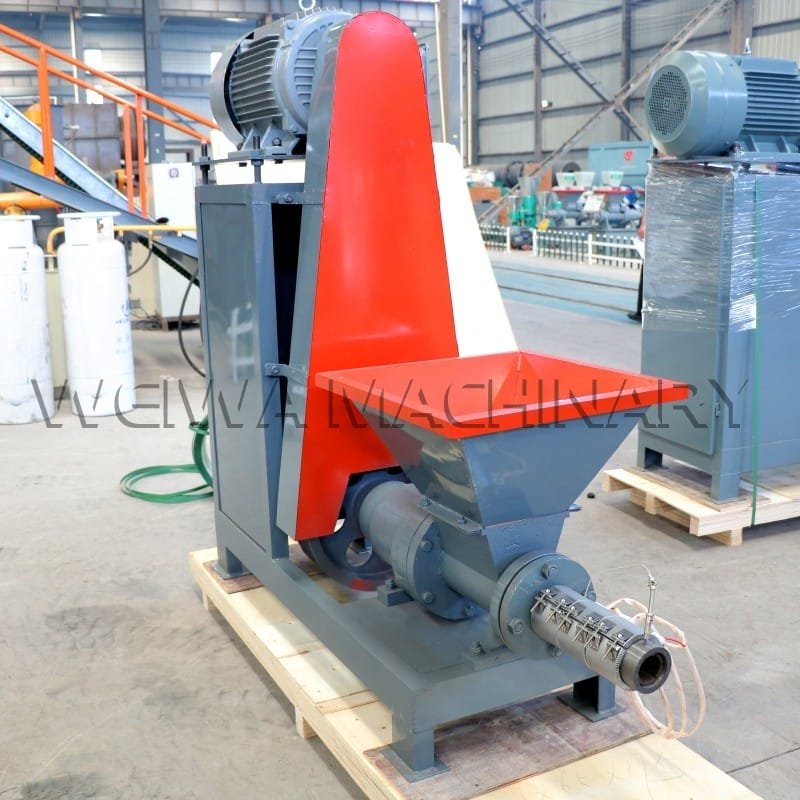
In recent weeks, Weiwa Machinery completed another significant shipment of industrial biomass processing equipment destined for Kenya, marking a continued expansion of our presence across East Africa. This shipment primarily consisted of multiple units of sawdust extrude machine systems designed to turn sawdust into briquettes efficiently and sustainably. Observing the loading process at our factory workshop offered more than just a logistical milestone; it revealed how making charcoal briquettes from sawdust is gradually transforming energy access, agricultural waste management, and small-scale industrial fuel production in Kenya and neighboring African regions.
केन्या, like many countries in sub-Saharan Africa, faces a dual challenge of rising demand for affordable cooking and heating fuel alongside mounting pressure to manage agricultural and forestry residues in an environmentally responsible way. Sawdust briquettes have emerged as a practical, cleaner alternative to traditional firewood and irregular charcoal supplies. वेइवा मशीनरी में, we have spent more than thirty years refining the engineering, durability, and adaptability of our sawdust extrude machine lines to meet exactly these kinds of real-world conditions found in African markets.
On-Site at the Factory Witnessing the Shipment to Kenya
The morning of the shipment began with final quality inspections inside our assembly hall. Each sawdust extrude machine undergoes a strict pre-delivery checklist including screw compression testing, heating ring calibration, temperature control indicator verification, and no-load running trials. For exports to Kenya, we pay particular attention to voltage compatibility, container-optimized wooden box packaging, and fumigation certification required by international phytosanitary standards. The machines prepared for this order were configured to process sawdust, चावल की भूसी, गन्ना अवशेष, and bamboo dust with particle sizes under 5mm and moisture content below 12 प्रतिशत.
As the forklifts moved the heavy equipment toward the container, our after-sales team double-checked spare part kits, multilingual operation manuals, and customized layout drawings provided to the Kenyan client during the project planning stage. One of the advantages frequently highlighted by our African partners is that Weiwa Machinery does not only sell machines; we co-design production lines. For this Kenyan buyer, the proposed workflow included a grinder to reduce raw material diameter to around 3–5 mm, a rotary dryer to achieve safe moisture levels, the core sawdust extrude machine unit, and subsequent carbonization equipment. Watching the container doors close, it became clear how interconnected mechanical reliability and local energy transition really are.
Kenya’s interest in sawdust briquettes is not accidental. With urbanization accelerating around Nairobi, Mombasa, and Kisumu, the demand for consistent, high-calorific-value solid fuel is outpacing traditional supply chains. Many Kenyan entrepreneurs are turning to biomass briquettes as a business opportunity, and they increasingly search for dependable machinery that can turn sawdust into briquettes without excessive maintenance downtime. That is where our extrusion technology, which relies on natural lignin liberation under high pressure and temperature to bind particles, becomes relevant. No artificial binders are required, which reduces operational cost and keeps the fuel cleaner during combustion.
Why Sawdust Briquettes in Kenya Are Gaining Momentum?
Across rural and peri-urban Kenya, large volumes of sawdust, कॉफ़ी की भूसी, पैरे हुए, and maize cob residues are often underutilized or openly burned, contributing to air pollution and wasted energy potential. Introducing sawdust briquettes in Kenya helps close this loop. Briquettes produced by a properly calibrated sawdust extrude machine typically show a density favorable for transport, a calorific value over 20 percent higher than ordinary firewood, and more uniform combustion behavior. For households, institutions, and small factories, this translates into steadier heat output, reduced smoke, and lower weekly fuel expenses.
Market analysts and local Kenyan energy reports frequently note that biomass accounts for a substantial share of the country’s primary energy mix. तथापि, much of it still comes from inefficient sources. Making charcoal briquettes from sawdust introduces a middle ground between traditional charcoal and modern renewable systems that may still be costly to deploy at scale. In regions where grid electricity remains intermittent, briquettes serve as a bridge fuel—locally produced, relatively easy to store, and compatible with existing stoves when shaped correctly. Our Kenyan clients often choose hollow hexagonal or quadrangular profiles, with diameters ranging from 45 mm to 80 मिमी, depending on end-user preferences and stove designs.
Beyond household cooking, there is growing interest from brick kilns, bakeries, and agro-processing units in Kenya to adopt sawdust briquettes as a partial substitute for wood charcoal or imported fossil fuels. The machines shipped in this latest order will be installed in a central production yard where sawdust from nearby timber mills is collected daily. By installing a dedicated sawdust extrude machine line, the operator expects to convert what was once a disposal problem into a revenue stream while contributing to reduced deforestation pressure in surrounding forested areas.
It is also worth noting that Kenya’s policy environment increasingly acknowledges the role of clean cooking solutions. Various county-level initiatives and NGO-led programs promote improved biomass fuel technologies, especially those that minimize indoor air pollution. Producers who can demonstrate consistent briquette quality—uniform diameter, controlled moisture in the input, and stable combustion characteristics—are better positioned to engage with such programs. This is why many buyers in Kenya prioritize suppliers like Weiwa Machinery that provide not only robust equipment but also technical guidance on raw material preparation, drying thresholds, and carbonization timing.
Understanding the चूरा अतिरिक्त मशीन and Briquetting Science
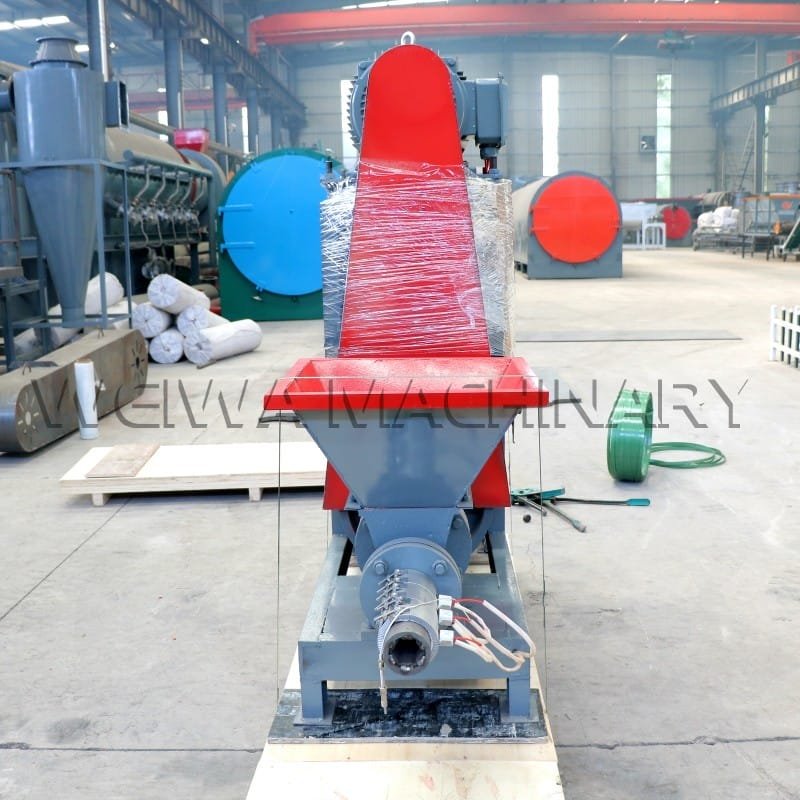
To appreciate why making charcoal briquettes from sawdust is both technically feasible and economically attractive, it helps to understand how a sawdust extrude machine works. The core of the machine is a large screw shaft rotating inside a barrel equipped with heating rings. Dried sawdust or other biomass particles are fed continuously into the inlet hopper. As the screw advances, the material is compressed progressively, raising both pressure and temperature. इन शर्तों के तहत, natural lignin within the woody biomass softens and acts as an internal binder. No chemical additives are necessary when the moisture and particle size are properly controlled.
The heated barrel further plasticizes the material surface, allowing it to fuse into a coherent strand as it is forced through a forming die at the outlet. Depending on the die design, the extruded briquette can take shapes such as solid or hollow quadrangular, pentagonal, or hexagonal cylinders. Some configurations include a central hole of about 15–20 mm to improve combustion airflow. The sawdust extrude machine we shipped to Kenya features adjustable temperature indicators to maintain steady thermal conditions, a reinforced screw made of wear-resistant alloy, and modular die holders so operators can switch shapes without replacing the entire extrusion head.
In practice, the briquetting process typically follows five interconnected steps. पहला, raw material such as sawdust, बांस की धूल, or crop stalks is crushed to a suitable particle size, usually 3–5 mm, using a grinder. दूसरा, the material is dried until moisture content drops below 12 प्रतिशत, often with a rotary drum or pipeline dryer depending on throughput. तीसरा, the dried material enters the sawdust extrude machine where high-pressure extrusion forms dense briquettes. Fourth, the resulting sticks are carbonized in a kiln or furnace to convert them into charcoal briquettes with enhanced energy density and cleaner ignition properties. Fifth, finished charcoal products are sorted, cooled, and packaged for distribution. Each step influences the final quality, which is why Weiwa Machinery emphasizes complete production line planning rather than isolated machine sales.
The physical properties of briquettes produced this way are notable. Because lignin binding and high compression eliminate most interstitial air, the density is significantly higher than loose sawdust or manually pressed blocks. This density improves transport efficiency, reduces breakage, and extends burn time. In Kenyan field tests shared by some of our earlier clients, sawdust briquettes in Kenya produced with similar extrusion systems showed more stable ignition, less visible smoke during start-up, and predictable ash residuals compared to informally produced charcoal. While outcomes depend on raw material consistency and operator skill, the underlying extrusion mechanism provides a repeatable framework for quality control.
African Market Potential Beyond Kenya
Although this shipment specifically targeted Kenya, the broader trajectory for sawdust briquettes and biomass extrusion equipment across Africa is encouraging. Countries with active timber processing, sugarcane milling, rice production, or coffee hull generation—such as Uganda, Tanzania, इथियोपिया, Ghana, Nigeria, and Zambia—face similar questions around waste utilization and energy affordability. In many of these contexts, the ability to turn sawdust into briquettes aligns with both entrepreneurial opportunities and community-level environmental goals.
East Africa in particular has seen a gradual increase in small and medium-sized briquette enterprises. Some operate as cooperative ventures near urban fringes, sourcing sawdust from furniture clusters and supplying packaged briquettes to low- and middle-income households. Others integrate briquette production into existing agro-processing sites, using their own residues to offset diesel or charcoal costs. The sawdust extrude machine fits well into these models because it scales reasonably from semi-industrial workshops to larger continuous-run plants. When paired with proper drying and carbonization units, the same core machine can serve diverse input profiles, from hardwood sawdust to palm husk and tea waste.
Market potential also ties back to fuel price volatility. In several African cities, imported cooking gas prices fluctuate with global trends, and subsidized charcoal often suffers supply inconsistencies. Making charcoal briquettes from sawdust offers a locally anchored alternative whose raw material cost is largely decoupled from international energy markets. Entrepreneurs who secure stable sawdust supply agreements with timber yards or sawmills can plan production with greater predictability. कई के लिए, the entry barrier is not interest but access to reliable machinery and technical know-how—exactly the gap Weiwa Machinery aims to fill through our export experience, customized design services, and professional after-sales support.
It is also relevant that biomass briquette adoption does not require overnight behavioral shifts. In Kenya and elsewhere, many households already use charcoal stoves. Transitioning to sawdust briquettes mainly involves selecting compatible briquette dimensions and educating users on stacking, airflow, and lighting techniques. Extruded briquettes with central holes or faceted exteriors tend to ignite more readily and maintain combustion with less frequent tending. Over time, as users associate briquettes with steadier heat and lower smoke, market acceptance consolidates. Equipment suppliers who understand these nuanced end-use factors—not just the mechanics of extrusion—are better placed to advise clients on die selection, throughput planning, and maintenance schedules.
Technical Considerations for Operating in Kenya and Similar Climates
Exporting a sawdust extrude machine to Kenya also means accounting for climate, power infrastructure, and maintenance realities. Ambient humidity can affect raw material drying efficiency, especially during long rainy seasons. We often recommend clients in such regions invest in slightly higher-capacity dryers or hybrid solar-assisted pre-drying yards to stabilize input moisture before extrusion. Moisture above the recommended threshold not only reduces briquette density but can also increase wear on the screw and heating elements due to inconsistent extrusion resistance.
Power supply variations are another consideration. Our Kenya-bound machines are typically equipped with motors matched to local voltage standards and, where requested, soft starters to reduce inrush current. Control panels are laid out with clear labeling in English and include overload protection suited for semi-industrial workshops. For remote sites where three-phase power is unreliable, we have previously discussed generator sizing guidelines and power factor considerations during the design phase. These details may seem secondary to the extrusion process itself, yet they strongly influence uptime and product consistency.
Spare parts availability and operator training also shape long-term success. A sawdust extrude machine relies on high-wear components such as the screw shaft, inner barrel liner, and heating coils. Weiwa Machinery ships essential spare kits with initial orders and provides detailed maintenance intervals based on throughput tonnage. For Kenyan clients, we have conducted remote video training sessions covering daily lubrication points, temperature controller calibration, and die replacement procedures. Over time, some of our African partners have developed in-house maintenance routines and even local fabrication relationships for non-critical replacements, further improving equipment sustainability.
Another practical aspect is layout planning. A typical line to turn sawdust into briquettes requires space not only for the extrude machine but also for material staging, drying beds or rotary dryers, carbonization units, cooling zones, and finished goods storage. Our team prepares scaled layout drawings tailored to the client’s available plot, considering workflow direction, dust extraction possibilities, and safe clearance around moving parts. For the recent Kenya shipment, the proposed site measured approximately 300 square meters under a semi-covered shed, with separate zones for raw material intake and carbonization to minimize fire risk. Thoughtful spatial planning often determines whether a briquette venture runs smoothly or struggles with bottlenecks and material handling inefficiencies.
Environmental and Social Dimensions of Sawdust Briquettes in Kenya
When discussing sawdust briquettes in Kenya, environmental narratives frequently center on deforestation mitigation and waste valorization. Although briquettes are not a silver bullet, they contribute to reducing reliance on unsustainably harvested wood charcoal. By converting sawmill residues and agricultural byproducts into dense fuel, producers displace a portion of charcoal demand that might otherwise drive further tree cutting. In regions where enforcement of forestry regulations is uneven, market-based alternatives like briquettes can complement policy efforts by making waste-based fuel economically visible.
There is also a social dimension. Small-scale briquette production can generate local employment across collection, grinding, सुखाने, machine operation, अथ जलकर कोयला हो जाना, packaging, and distribution. For youth and women’s groups in peri-urban Kenya, biomass briquette micro-enterprises have been explored as income-generating activities with relatively modest capital entry compared to other manufacturing sectors. Access to a dependable sawdust extrude machine lowers the technical uncertainty, provided users receive clear guidance on raw material standards and safety practices around carbonization kilns.
Moreover, because making charcoal briquettes from sawdust typically emits less particulate matter during combustion than low-quality charcoal or open burning of residues, there are potential indoor air quality benefits when households switch partially or fully to briquettes. The extent of improvement depends on stove design, ventilation, and user behavior, but multiple field observations in East Africa suggest reduced smoke onset during ignition when briquettes are properly carbonized and dried. Equipment suppliers and project developers who incorporate simple user education—such as advising on stove height, airflow gaps, and gradual feeding—can amplify these gains without sophisticated technology upgrades.
At the community level, visible success stories matter. When a Kenyan cooperative demonstrates that sawdust once discarded behind a timber yard can become marketable fuel powering local bakeries or school kitchens, it shifts perceptions around waste and energy. Such demonstrations often attract interest from county officials, NGOs, and micro-finance institutions, creating a feedback loop where improved machinery, better raw material coordination, and modest credit access reinforce each other. Weiwa Machinery’s role in this ecosystem is to ensure the core equipment—the sawdust extrude machine—operates reliably under real African workshop conditions and integrates coherently with dryers, grinders, and kilns already familiar to local operators.
Looking Ahead Continued Collaboration with African Clients
The shipment to Kenya is not an isolated event but part of an ongoing dialogue with African entrepreneurs exploring biomass energy solutions. Over the past decades, Weiwa Machinery has exported to more than 130 देशों, इंडोनेशिया सहित, भारत, मलेशिया, लाओस, म्यांमार, थाईलैंड, वियतनाम, फिलिपींस, पाकिस्तान, श्रीलंका, लेबनान, जॉर्जिया, टर्की, पोलैंड, चेक रिपब्लिक, मंगोलिया, दक्षिण कोरिया, रोमानिया, मिस्र, सूडान, Tunisia, एलजीरिया, इथियोपिया, Tanzania, Equatorial Guinea, जाम्बिया, मेक्सिको, दक्षिण अफ्रीका, गंभीर प्रयास. Each market presents distinct raw material profiles, climate patterns, and business models. Kenya’s mix of timber residues, agro-waste, and growing urban fuel demand makes it particularly suited for sawdust briquettes produced via extrusion technology.
Moving forward, we anticipate deeper collaboration with Kenyan partners on line optimization, carbonization method refinement, and product diversification. Some clients are already experimenting with blended inputs—mixing sawdust with rice husk or coffee husk to adjust combustion characteristics and raw material cost structures. The flexibility of the sawdust extrude machine to handle varied biomass under 5 mm particle size allows such experimentation without major hardware changes. Our technical team remains available to review test samples, suggest screw and die configurations, and simulate expected throughput under different moisture scenarios.
As African energy transitions unfold, the intersection of waste management, small-scale manufacturing, and clean cooking will likely remain relevant. Making charcoal briquettes from sawdust sits comfortably within this intersection, offering a tangible, scalable pathway for turning low-value residues into useful fuel. Shipments like the one described here are not merely logistics exercises; they represent the transfer of proven mechanical solutions into new contexts where they can adapt, evolve, and support local priorities. We look forward to seeing the installed machines in Kenya begin regular production and to learning from the operational feedback that will undoubtedly refine future designs.
For now, the container has departed, the machines are en route, and the anticipation among our Kenyan partners is palpable. Whether referred to as sawdust briquettes in Kenya, extruded biomass sticks, or charcoal briquette rods, the underlying story is consistent: with the right equipment, technical guidance, and commitment to quality, sawdust can become more than waste—it can become energy, income, and a small but meaningful step toward sustainable development.
के बारे में वेइवा मशीनरी
Weiwa Machinery brings more than thirty years of professional experience in the design, manufacture, and export of biomass briquette and charcoal production equipment. Our product range is centered on the sawdust extrude machine and complete production line solutions that turn sawdust into briquettes efficiently and reliably. We maintain a specialized after-sales team to support installation, operator training, troubleshooting, and spare parts supply worldwide. Understanding that every client’s site, raw material, and capacity requirement differ, we offer customized services including tailored production plans, equipment configuration advice, and detailed layout drawings to optimize workshop flow and safety. Whether you are exploring making charcoal briquettes from sawdust for the Kenyan market or planning a biomass fuel project in another region, Weiwa Machinery welcomes your inquiries and looks forward to supporting your venture with proven technology and attentive service.
Contact us today to discuss your project and receive a free design consultation:
भीड़: +8613838093177
Whatsapp: +8613838093177
ई-मेल: info@cjlmachinegroup.com
You are welcome to visit our factory and see our sawdust extrude machine in operation. We have served customers in over 130 countries and continue to refine our machines based on real-world feedback from Africa, Asia, Europe, and the Americas. Reach out now and let Weiwa Machinery help you build a practical, high-quality briquette production line suited to your market and raw materials.


 WeChat

 +8615937143060
