


परिचय
The Kingdom of Cambodia, with its rich agricultural and forestry resources, is witnessing a growing demand for efficient and sustainable energy solutions. Biomass waste, जैसे चूरा, चावल की भूसी, and other agricultural residues, represents a significant untapped potential for value-added products like charcoal briquettes. वेइवा मशीनरी में, we are committed to empowering industries worldwide with robust and reliable biomass processing technology.
Understanding the Cambodia Biomass and Charcoal Market
The Local Resource Landscape
Cambodia’s economy is heavily based on agriculture and forestry, generating substantial volumes of biomass by-products. Sawdust from timber processing, rice husks from milling, नारियल के गोले, and various crop stalks are abundantly available. Traditionally, this biomass is often disposed of through open burning or left to decompose, leading to environmental concerns and lost economic opportunity. The conversion of this waste into high-density solid fuel briquettes presents a compelling solution, addressing both waste management and energy needs.
Energy Demand and the Role of Solid Biomass Fuel
Charcoal remains a vital source of fuel for cooking and heating in many Cambodian households and small-scale industries. The demand for consistent, clean-burning, and efficient solid fuel is persistent. Machine-made charcoal briquettes, produced from compacted biomass, offer a superior alternative to traditional lump charcoal. They are known for higher calorific value, longer burn time, and lower emission of smoke, making them an attractive product for both domestic and commercial use. Investing in a charcoal making machine like the Sawdust Extruder enables local entrepreneurs and businesses to tap into this stable market, utilizing readily available raw materials.
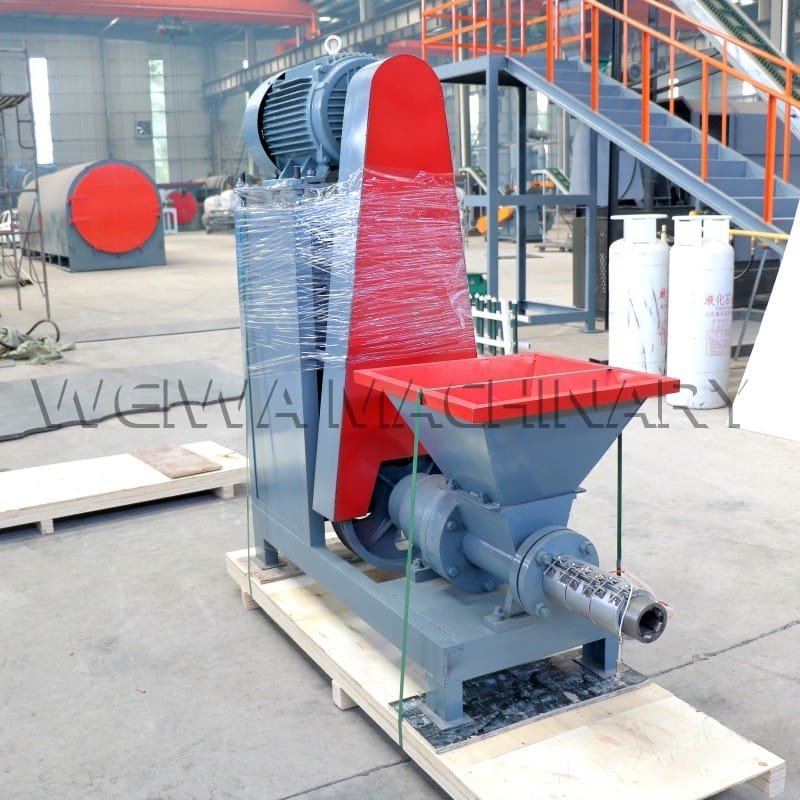
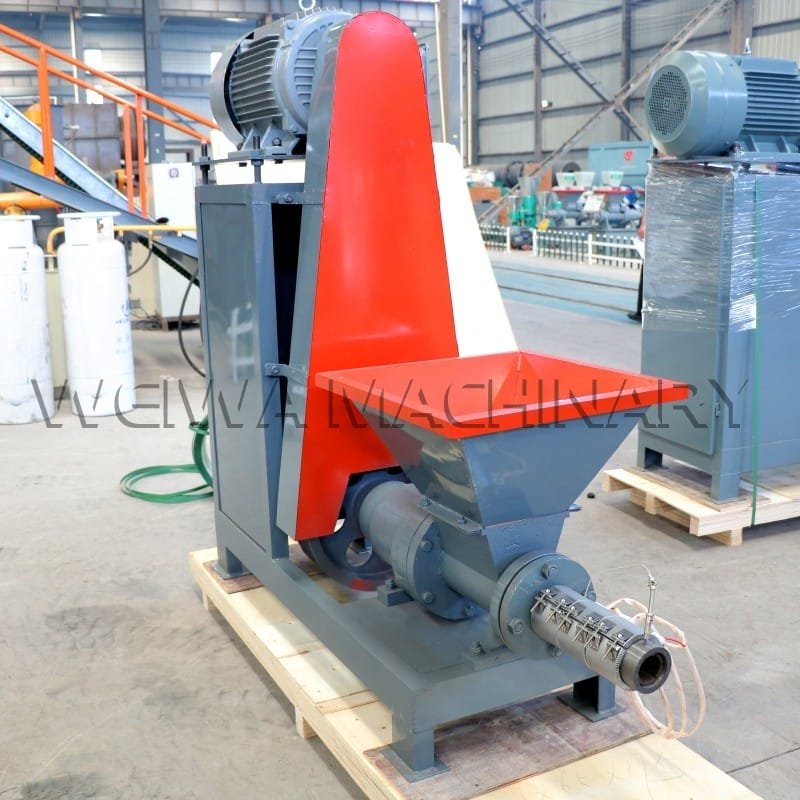
वेइवा मशीनरी Sawdust Extruder Machine A Technical Overview for Cambodian Clients
Our Sawdust Extrude Machine is engineered to transform various biomass materials into high-quality solid fuel sticks, which can be further carbonized into charcoal. The machine’s core principle involves using a large, hardened steel screw to compress and extrude the biomass under high pressure and temperature. This process liberates the natural lignin present in the biomass fibers. इन शर्तों के तहत, the lignin acts as a natural binder, fusing the particles together to form dense, solid briquettes without the need for any added chemicals or adhesives.
Key Features for Reliable Operations
The machine is designed for stability and ease of operation, crucial for successful long-term runs in diverse environments. It incorporates a temperature adjusting indicator, allowing operators to maintain an optimal and steady working temperature for consistent briquette quality. The rational structure of the machine simplifies routine maintenance and operation, reducing technical barriers for our clients. The final briquette shape, such as a hollow hexagonal or quadrangular cylinder, is determined by the mold installed, with common diameters ranging from 50mm to 80mm. This hollow center increases the surface area, facilitating easier ignition and more efficient combustion.
From Raw Material to Finished Briquette
A complete production line involves several key stages, as implemented at our client’s site. पहला, raw materials like wood chips or sawdust are reduced to a uniform small size (3-5मिमी) using a grinder. Next, a dryer brings the material’s moisture content down to below 12%, which is critical for effective briquetting. The dried material is then fed into the Sawdust Extruder Machine. यहाँ, under high pressure and temperature, the briquettes are formed. These dense briquette sticks can be used directly as solid fuel or can be fed into a carbonization furnace to produce high-quality charcoal. The final charcoal product retains the shape and high density of the extruded briquette.
Client Onsite Trial and Performance in Cambodia
Site Preparation and Machine Setup
Our recent engagement involved supporting a Cambodian client in setting up a pilot production line. The client’s primary feedstock was a mix of sawdust and rice husk, both locally sourced. Prior to machine installation, we emphasized the importance of proper material preparation, ensuring the feedstock was adequately crushed and dried to meet the machine’s specifications. Our technical team assisted in the setup, calibration, and initial testing of the Sawdust Extruder Machine, ensuring it was perfectly aligned for the specific material mix.
The Trial Run and Output Analysis
The trial run focused on evaluating machine stability, briquette formation rate, and product quality. The Sawdust Extruder Machine operated steadily at the set temperature. The extrusion process successfully produced solid, well-compacted hexagonal briquettes with a consistent diameter. The client noted the machine’s efficient consumption of the biomass mix, with a continuous output of briquettes. The produced briquettes were notably dense and hard, indicating a high calorific value, and they ignited easily during a subsequent combustion test. The successful trial demonstrated the machine’s capability to handle Cambodian biomass effectively and produce a market-ready fuel product.
Client Feedback and Observed Benefits
The client reported high satisfaction with the machine’s straightforward operation and the quality of the output. The ability to use a waste stream (sawdust and rice husk) to create a valuable product was a key economic driver. The solid fuel produced was confirmed to have features such as being easy to light, having a high calorific value (as documented, ऊपर 20% सामान्य लकड़ी से अधिक), and burning with relatively little smoke. The high density of the briquettes also made them favorable for storage and transportation within the local distribution network.
Optimizing Your Charcoal Production Project in Cambodia
Tailoring the Solution to Your Needs
Every project is unique, depending on the primary raw material and the desired production capacity. वेइवा मशीनरी में, we do not believe in a one-size-fits-all approach. We can design different production plans based on your specific raw material type, availability, and target output. Whether you are processing pure sawdust, चावल की भूसी, or a blend of agricultural residues, our engineering team can propose the most efficient system configuration for your Sawdust Extruder Machine setup in Cambodia.
Beyond the Machine Comprehensive Support
Our partnership extends beyond the sale. We provide guidance on the entire production process, from raw material preparation to the final carbonization stage if charcoal is the end goal. Understanding the local context in Cambodia, we ensure our machines are packaged securely—typically in wooden boxes, fumigated for international export standards—and that all necessary documentation and technical manuals are provided for a smooth customs clearance and installation process.
के बारे में वेइवा मशीनरी
Weiwa Machinery is a leading manufacturer and exporter of biomass briquetting and charcoal production equipment. With a dedication to innovation, quality, and customer success, we have served a global clientele spanning over 130 देशों, including numerous partners across Southeast Asia, मध्य पूर्व, अफ़्रीका, and Europe. Our product range, centered on reliable machines like the Sawdust Extrude Machine, is engineered to convert biomass waste into valuable energy, supporting both economic development and environmental sustainability. Our machines have become the trusted choice for over two million customers worldwide, a testament to our commitment to durability and performance. We welcome inquiries and the opportunity to discuss how we can empower your biomass venture in Cambodia or anywhere else in the world.
हमसे संपर्क करें:
For a free consultation or to request a customized production plan, please reach out to our sales team.
ईमेल: sales@cjlmachinegroup.com
Phone: +86 18439853888
You are also welcome to visit our factory to see our machines in operation.


 WeChat

 +8615937143060
