


परिचय
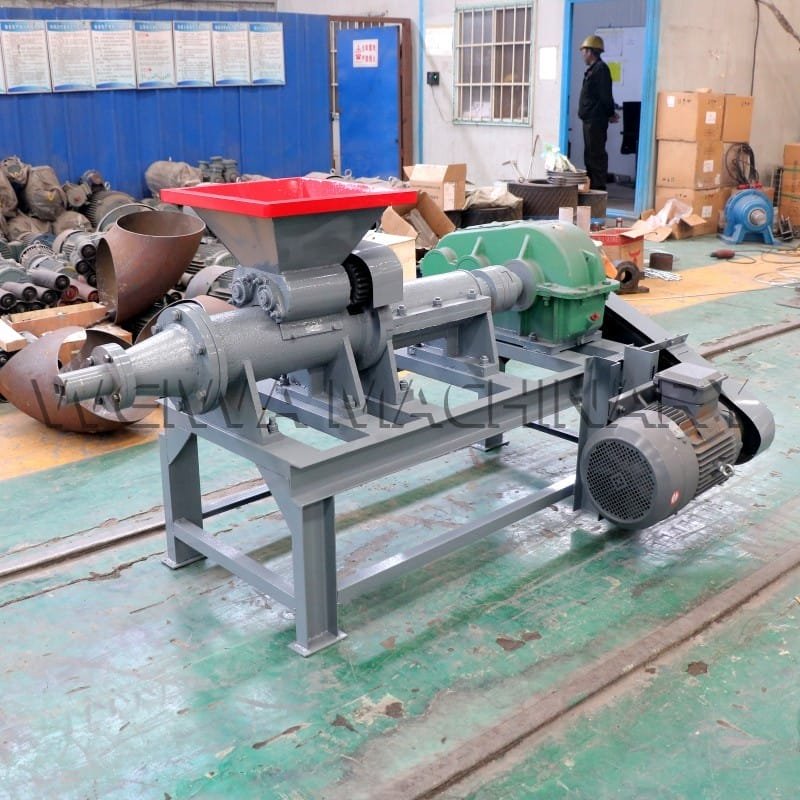
In early June 2026, Weiwa Machinery successfully loaded and dispatched a full coal rod machine production line bound for Kigali, Rwanda. The shipment included a high‑capacity charcoal extruder machine, supporting conveyors, crushing units, and drying systems. For our engineering team, this delivery represented not just another export order but a strategic step into one of Africa’s most promising biomass fuel markets. Over the past three decades, Weiwa Machinery has built a reputation for durable, कुशल, and customizable charcoal making machines, and this project demonstrates how our technology meets Rwanda’s evolving energy needs.
The selection of a charcoal extruder machine in Rwanda comes at a time when the country is actively seeking cleaner, more cost‑effective alternatives to traditional firewood and irregular charcoal. With rapid urban expansion, increasing industrial activity, and government policies encouraging renewable energy adoption, the demand for charcoal briquette machines is steadily rising.
Rwanda’s Growing Demand for Charcoal Extruder Machines
Rwanda’s economy has shown consistent growth over the last decade, accompanied by rising energy consumption in both domestic and industrial sectors. Urban centers such as Kigali, Huye, and Musanze are experiencing higher demand for cooking fuel, गरम करना, and small‑scale industrial heat sources. Traditional charcoal production methods often result in inconsistent quality, excessive smoke, and unnecessary deforestation. A modern charcoal extruder machine addresses these challenges by converting fine charcoal powder or agroforestry waste into uniformly shaped briquettes that burn longer and cleaner.
In addition, Rwanda’s geographical position within the East African Community allows easy distribution to neighboring countries such as Uganda, Burundi, Tanzania, and the Democratic Republic of Congo. Entrepreneurs investing in a coal rod machine in Rwanda are therefore well‑placed to serve both local and regional markets. This scalability is one reason why the charcoal briquette machine sector is forecasted to expand significantly over the next five years.
Agricultural Residue as Raw Material Advantage
One of the main advantages for Rwandan operators is the abundance of agricultural by‑products. Crop residues from maize, चावल, कॉफ़ी की भूसी, and banana peels can be carbonized and fed directly into a charcoal making machine. This not only lowers raw material costs but also provides an environmentally responsible way to manage agricultural waste. By integrating locally available resources with advanced extrusion technology, producers can achieve stable output without relying heavily on imported fuel products.
How a Charcoal Extruder Machine Works?
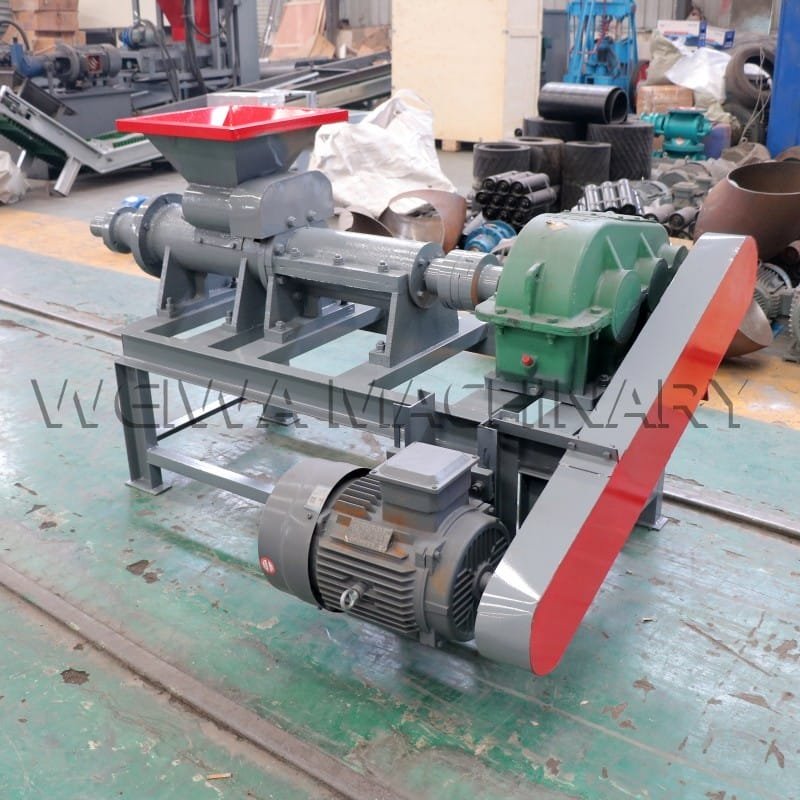
Understanding the operational process of a charcoal extruder machine helps potential buyers appreciate its efficiency. The system begins with raw material preparation, where charcoal particles or coal fines are crushed to a uniform size. A binder, often starch‑based or inorganic, is mixed thoroughly to ensure cohesion during forming. The mixture is then fed into the extrusion chamber, where a screw shaft applies high pressure, pushing the material through a specially designed mold. The resulting rods are dense, structurally stable, and ready for drying or direct packaging.
This mechanism ensures that every briquette maintains consistent dimensions, which is critical for automated handling, storage, and combustion performance. Unlike hand‑molded charcoal, extruded rods do not break easily, reducing losses during transport. For industries requiring continuous fuel supply, such reliability is invaluable.
Technical Features of Weiwa Coal Rod Machines
Weiwa Machinery designs each coal rod machine with heavy‑duty alloy steel screws and wear‑resistant liners to withstand prolonged operation under high loads. Our charcoal extruder machines incorporate adjustable compression ratios, enabling operators to modify briquette density according to specific market requirements. Energy‑efficient motors reduce electricity consumption, while modular components simplify maintenance and part replacement. These features make our machines suitable for both small workshops and large industrial plants in Rwanda.
Market Potential for Charcoal Briquette Machines in Rwanda
Multiple factors contribute to the strong market outlook for charcoal briquette machines in Rwanda. Firstly, population growth and urban migration increase household fuel demand. Secondly, small and medium enterprises in food processing, brick making, and metalworking require affordable solid fuels. Thirdly, Rwanda’s commitment to reducing carbon emissions encourages cleaner combustion technologies. A charcoal extruder machine in Rwanda aligns perfectly with these trends, offering a scalable solution that meets both economic and environmental goals.
Export potential further strengthens the investment case. Neighboring landlocked nations often face fuel shortages and price volatility. By establishing a briquette production facility in Rwanda, entrepreneurs can supply cross‑border markets, leveraging existing trade agreements within the East African Community. This positions the charcoal making machine not merely as a piece of equipment but as a gateway to regional commerce.
Government Policies Supporting Biomass Energy
The Government of Rwanda has introduced several measures to promote renewable energy adoption, including tax incentives for clean technology imports and subsidies for biomass processing facilities. These policies directly benefit investors purchasing a coal rod machine in Rwanda, lowering the effective cost of setting up production lines. Additionally, environmental regulations discourage traditional kiln charcoal production, indirectly boosting demand for compliant machinery such as Weiwa’s charcoal extruder machines.
Practical Benefits of Investing in a Charcoal Extruder Machine
Investing in a charcoal extruder machine offers tangible benefits for Rwandan business owners. Uniform briquette size improves combustion efficiency, meaning customers get more heat per kilogram compared to loosely packed charcoal. Reduced dust generation creates safer working conditions and minimizes material loss. Standardized shapes simplify stacking and storage, optimizing warehouse space. Furthermore, mechanized production requires fewer laborers than manual briquette molding, allowing owners to reallocate human resources to other value‑adding tasks.
From a branding perspective, consistently high‑quality briquettes enhance customer loyalty. In competitive urban markets, reliable performance often determines repeat purchases. A charcoal briquette machine thus becomes a tool for building long‑term brand equity in addition to generating immediate revenue.
Environmental Impact Reduction
By utilizing agricultural waste and controlling combustion properties, a charcoal making machine significantly reduces pressure on natural forests. Deforestation remains a concern in many parts of Africa, and Rwanda is no exception. Offering an alternative that consumes waste materials instead of fresh timber supports both conservation goals and sustainable business practices. This environmental advantage can also be leveraged in marketing campaigns, appealing to eco‑conscious consumers and institutional buyers.
Logistics and Installation of the Rwanda Shipment
The recent Weiwa Machinery shipment to Rwanda involved meticulous logistical coordination. Each section of the coal rod machine was reinforced with anti‑rust coatings and shock‑absorbing packaging to withstand long‑distance road transport. Spare parts kits were included to minimize downtime during commissioning. Upon arrival, our technical engineers provided remote guidance for foundation preparation, alignment, and trial runs. This approach ensures that even first‑time operators can achieve stable production quickly.
Weiwa’s after‑sales framework includes detailed operation manuals, video tutorials, and real‑time WhatsApp support. Clients in Rwanda benefit from rapid response times, minimizing interruptions to their production schedules. Such comprehensive service reinforces confidence in choosing a charcoal extruder machine in Rwanda from our company.
Customization Services for Different Capacities
Not every client requires the same production volume. Weiwa Machinery offers flexible customization options for charcoal briquette machines, ranging from small‑scale units producing a few hundred kilograms per hour to large industrial systems exceeding several tons per hour. Customization extends to mold shape, briquette diameter, and automation level. This adaptability ensures that investors only pay for the capacity they need while retaining the option to upgrade in the future.
Competitive Landscape and Differentiation
While several suppliers offer charcoal extruder machines globally, Weiwa Machinery differentiates itself through three decades of engineering expertise, robust build quality, and responsive service. Our coal rod machines undergo rigorous testing before leaving the factory, ensuring dimensional accuracy and mechanical stability. Unlike low‑cost alternatives that may fail within months, Weiwa equipment is designed for multi‑year continuous operation, delivering better return on investment for Rwandan buyers.
Moreover, our ability to provide complete production line solutions—including crushing, mixing, extrusion, सुखाने, and packaging—eliminates the complexity of sourcing separate components from multiple vendors. This integrated approach streamlines project execution and reduces compatibility issues.
Training and Knowledge Transfer
Beyond hardware supply, Weiwa Machinery emphasizes operator training. Proper machine handling, नियमित रखरखाव, and safety protocols are essential for maximizing output and prolonging equipment life. During the Rwanda project, we conducted virtual training sessions covering start‑up procedures, fault diagnosis, and preventive maintenance schedules. This knowledge transfer empowers local teams to operate independently, reducing dependency on external technicians.
Future Prospects for Charcoal Making Machines in Rwanda
Looking ahead, the trajectory for charcoal extruder machines in Rwanda appears highly favorable. Urbanization will continue to drive household fuel demand, while industrial sectors seek stable, affordable energy sources. Technological advancements will likely introduce smarter control systems, higher automation levels, and improved energy efficiency. Early adopters who establish reliable supply chains now will be well‑positioned to capture expanding market share in the coming decade.
Environmental considerations will also shape the industry. As carbon pricing mechanisms and emission standards become more prevalent, producers using modern charcoal briquette machines will enjoy compliance advantages over traditional charcoal kilns. This regulatory alignment further strengthens the investment case.
के बारे में वेइवा मशीनरी
Weiwa Machinery brings more than thirty years of experience in designing, उत्पादन, and exporting charcoal extruder machines, coal rod machines, and complete briquette production lines worldwide. Our dedicated after‑sales team provides prompt technical support, spare parts supply, and operational training. We offer customized solutions tailored to each client’s production goals, including detailed design drawings and site layout planning. Whether you are starting a new venture in Rwanda or upgrading existing facilities, Weiwa Machinery delivers equipment built for durability, efficiency, and profitability.
If you are interested in learning more about a charcoal extruder machine in Rwanda or wish to discuss the potential of a coal rod machine for your business, please contact us today for a personalized quotation.
Mobile / WhatsApp: +8613838093177
ईमेल: info@cjlmachinegroup.com


 WeChat

 +8615937143060
